Why High-Drop UV Printing Gets Misaligned – 4 Common Causes
When high-drop UV printing goes wrong, the first question is usually: is the printhead faulty?
Sometimes. But more often, the problem lies elsewhere. High-drop printing isn’t just about how far the printhead can fire. It’s about whether the entire system—printhead, waveform, negative pressure, ink, and airflow—can stay stable at greater distances. When any part of that chain breaks down, misalignment happens.
Here are four real reasons we’ve confirmed through years of on-site support.
-
The waveform is still set for flat printing
This is the most common issue. Many users keep the same waveform parameters—voltage, slope, pulse width—when switching to high-drop printheads. The ink droplets don’t get enough initial velocity and break into satellite dots mid-flight, easily drifting off course.
Ink also matters. High-drop printing needs specially formulated inks with specific viscosity and surface tension. Standard inks may work fine on flat surfaces but fail at greater distances. When sourcing equipment, prioritize suppliers that offer complete systems—not just hardware. A reliable UV printer manufacturer will provide matching waveforms and inks for your specific application.
-
The printhead looks clean—but it isn’t
Contamination on the nozzle plate that barely affects flat printing can cause significant deflection at high drop distances. Any minor blockage or wear gets amplified over longer flight paths.
Regular inspection with proper tools helps catch these issues early. Even a thin layer of ink mist buildup can change droplet trajectories. A well-maintained UV Flatbed Printer depends on consistent cleaning routines, especially when running high-drop applications.
-
Airflow is the hidden disruptor
Droplets travel 15–22mm from printhead to substrate. That’s enough distance for air currents—from air conditioning, equipment movement, or even operator traffic—to push droplets off target.
One field case: we placed an A4 sheet under the printhead and found droplet deflection matched the direction of the workshop’s AC airflow. Adding a simple baffle solved most of the problem.
-
The printhead and platform aren’t perfectly aligned
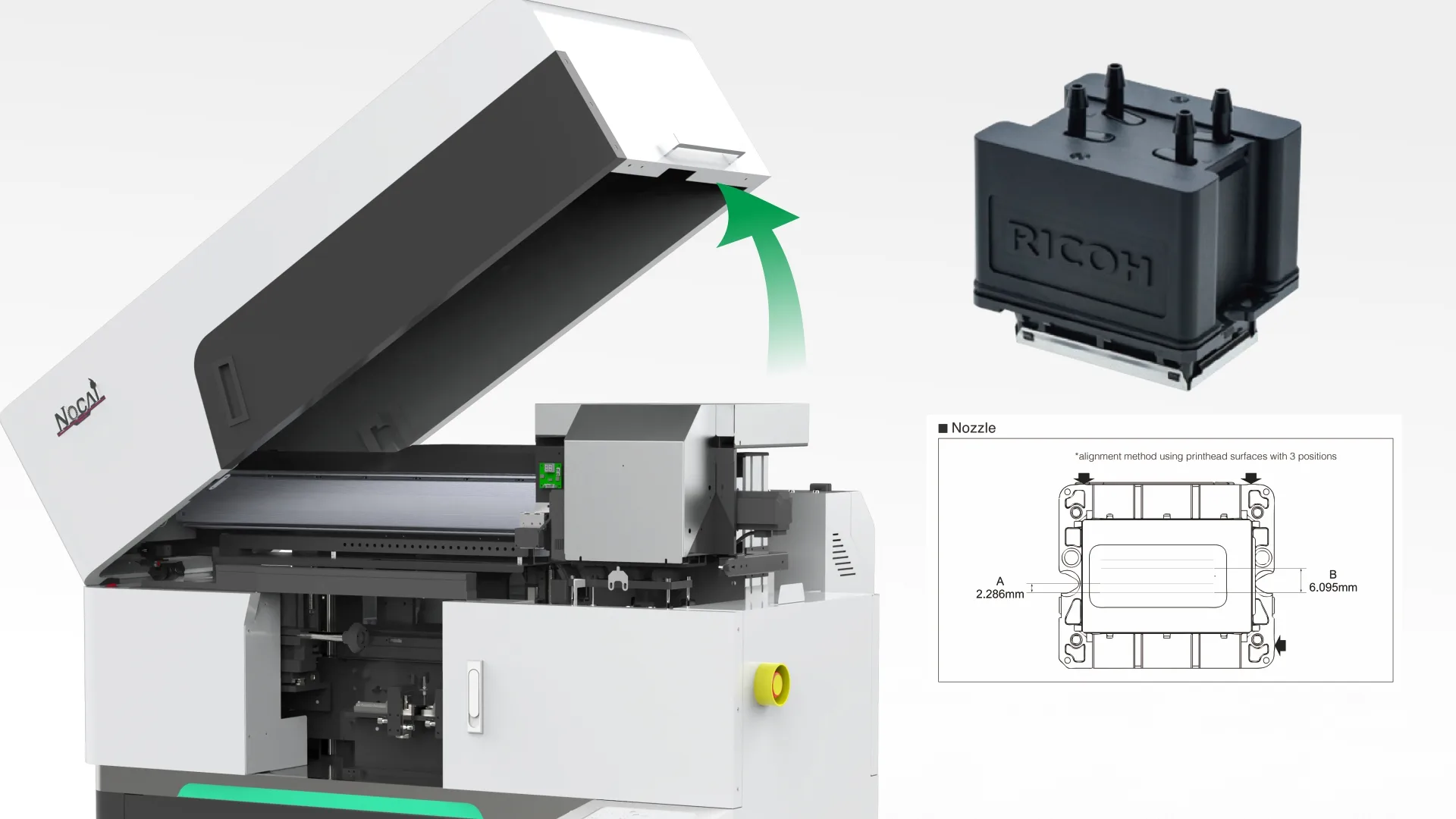
A slight angle between printhead and printing surface creates horizontal displacement at high drop distances. Uneven substrates or warped materials also cause actual drop height to vary, leading to inconsistent print quality.
Regular mechanical calibration is essential for applications demanding precision at height.
Troubleshooting steps
Follow this order for the fastest results:
- Control the environment: redirect AC vents or install baffles.
- Clean the printhead thoroughly with proper solution and inspect nozzles with magnification.
- Verify waveform optimization and confirm you’re using ink formulated for high-drop printing.
- Check mechanical alignment between printhead and platform.
What really matters
High-drop printing isn’t about a single component. It’s about how well the entire system works together. That’s why we focus on matching waveforms, inks, and mechanical setup to your actual production environment. 28mm is a theoretical limit. Achieving consistent quality at 15mm requires fine-tuning across the entire system—not just the printhead. When evaluating UV printers for high-drop applications, pay attention to waveform development, ink compatibility, and application support. A supplier that understands the full system—not just the printhead—will save you time and frustration. A knowledgeable professional UV printer supplier is worth more than a spec sheet.