High-Drop Inkjet Printing System – Working Principle and Key Considerations
High-drop inkjet printing has become increasingly important for applications requiring printing on uneven surfaces, thick substrates, or three-dimensional objects. Unlike standard flatbed printing, where the printhead operates close to the substrate, high-drop printing involves a significantly larger gap height – often 5mm or more. This extended flight path introduces unique challenges that demand careful system design and optimization.
-
Printhead System
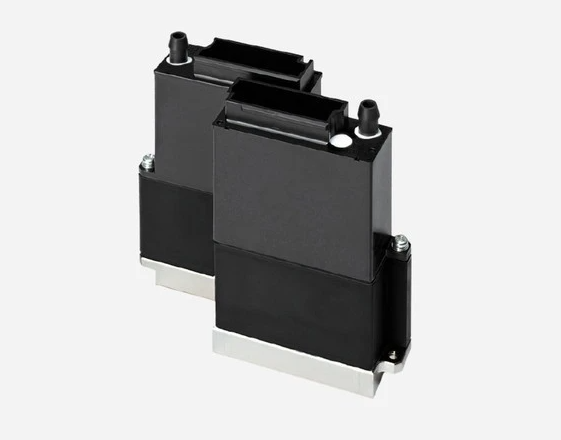
The printhead is driven by optimized waveform parameters that control droplet ejection. For high-drop applications, standard flat-printing waveforms are often insufficient; dedicated waveforms are typically required to generate sufficient initial droplet velocity . A reliable UV printer manufacturer will normally provide waveform libraries tailored to different drop heights and ink formulations. The latest high-drop printheads, such as Ricoh’s TH6310F, incorporate features like MEMS technology and special nozzle arrangements to reduce the impact of airflow on droplet trajectory, achieving high-quality printing even at 4mm gap heights .
-
Droplet Generation and Flight Path
Droplets ejected from the nozzle array travel across the gap height to reach the substrate. During flight, droplets experience air resistance and deceleration. Research has shown that as gap height increases, droplet placement accuracy decreases significantly – with one study indicating that a 2mm height increase can cause approximately 250μm of dot shift. At extended distances, improper waveform settings can cause droplets to break into satellite dots, reducing placement accuracy. Some advanced printhead designs use non-circular nozzle shapes to reduce wake effects and improve trajectory stability.
-
Airflow Interference Zone
Airflow is one of the most critical factors in high-drop printing. Air currents generated by equipment movement, HVAC systems, or operator activity can deflect droplets mid-flight, causing misalignment . In extreme cases, droplet displacement can become significant. Some systems address this by using pressure control to reduce environmental interference . For businesses investing in a UV Flatbed Printer for high-drop work, understanding airflow management is essential.
-
Substrate Surface
Ink lands on flat, curved, or irregular surfaces. Because actual drop height may vary across the substrate, controlling ink volume per unit area is essential to ensure uniform thickness and consistent print quality . For textured or uneven materials, where drop height variation can affect final output, some systems use grayscale adjustment and color separation percentage to maintain uniformity.
Practical Applications
High-drop inkjet printing is widely used in:
- Decorative printing on textured building materials
- Printing on pre-assembled products with uneven surfaces
- Industrial coding and marking on curved or irregular components
- Custom printing on thick substrates
Troubleshooting Common Issues
When high-drop printing problems occur, follow this systematic approach:
- Verify waveform settings are optimized for your specific drop height .
- Check ink formulation – different inks require different waveform parameters .
- Assess airflow in the printing environment – redirect vents or install baffles.
- Inspect printhead cleanliness and nozzle condition.
- Verify mechanical alignment between printhead and platform.
Making the Right Equipment Choice
Not all industrial UV printing solutions are equal when it comes to high-drop capability. When evaluating equipment, ask potential suppliers about waveform development capabilities, ink compatibility for your specific substrates and drop heights, airflow management features on their equipment, and technical support resources.
Choosing a professional UV printer supplier with experience in high-drop applications can save significant time and frustration. A knowledgeable partner will help you navigate the complexities of system integration and provide ongoing support.